

Electric Car Prices in Qatar 2026: The Full Picture
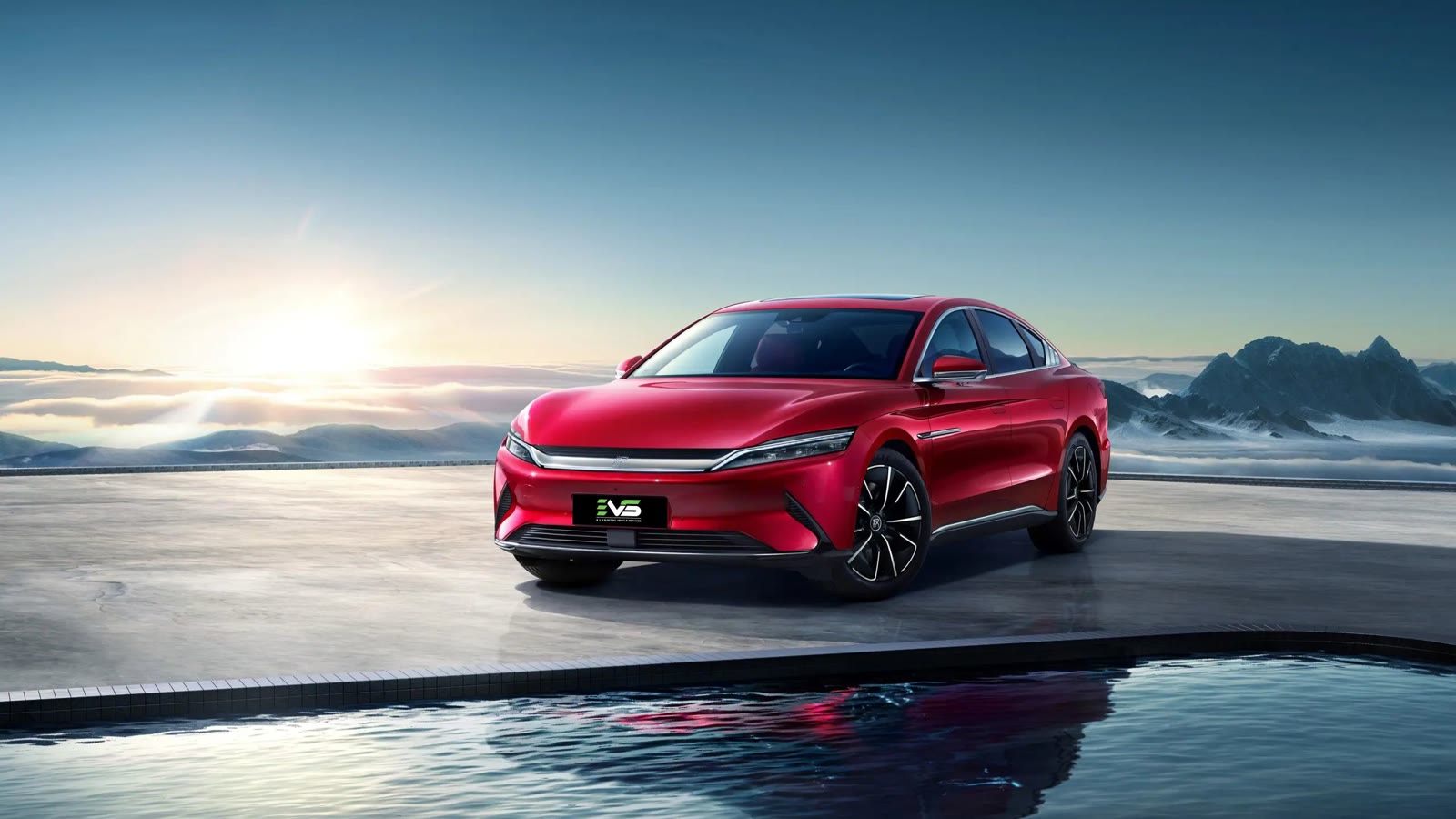
Search for electric car prices in Qatar and you will get a lot of numbers that disagree with each other. The same Tesla Model Y shows up at QAR 155,000 on one site, QAR 165,000 on another and QAR 220,000 on a third. For the Chinese models now arriving in Doha — the ROX 01, Avatr 12, Denza, Maextro S800 — you will often get no price at all.
Neither of those is a mistake on your part. There are real reasons the numbers scatter, and there is a second set of costs that no listing page shows you. This guide covers both.
Why the same car shows three different prices
Three things are being mixed together in search results, and separating them explains almost all of the confusion.
Launch pricing versus current pricing. When a model first lands in Qatar, early listings capture the introductory figure. Those pages stay indexed long after the price has moved. A number from launch week and a number from this month can sit side by side in your search results with nothing to tell you which is which.
Direct sales versus dealer listings. Tesla sells direct in Qatar. A manufacturer price and a third-party marketplace listing are not the same thing — the second can carry margin, options, or be a nearly-new car being resold. Marketplaces also mix new and used inventory on the same page.
Currency and regional bleed. Plenty of Gulf listings quote AED figures on pages that rank for Qatari searches. At roughly similar magnitudes, an AED number reads like a plausible QAR number, and it is not.
As of November 2026, DriveArabia lists the 2026 Tesla Model Y in Qatar from around QAR 164,990, with the 78 kWh Performance AWD reaching roughly QAR 209,990. Marketplace listings for the same model year run both below and above that. We cover the Tesla range specifically in our guide to Tesla prices in Qatar.
Treat every figure you find, including ours, as indicative. Confirm with the seller before you commit.
The Chinese models: why there is often no price at all
This is the part that frustrates people most. Search "ROX 01 Qatar price" or "Avatr 12 price Qatar" and you will find specification pages, launch coverage and comparison articles — but frequently no figure.
That is not an oversight. These models reach Qatar through distributor arrangements that are still being established, and pricing is often not published publicly in the way a long-established brand's is. Some listings carry a "coming soon" placeholder with no number behind it.
What this means practically:
- A quote is the only reliable price. For these models, contact the distributor directly. There is no published list to check against.
- Confirm the exact variant. This is where Gulf buyers get caught. Several of these cars are sold as full-electric in China and arrive here as extended-range or plug-in hybrid versions, or with a different battery chemistry and capacity. The specification sheet you read online may not describe the car being offered to you.
- Ask what the warranty actually covers, in writing, before the price discussion.
We have written model-specific guides where the Gulf specification differs from what the international spec sheet implies — the ROX 01, the Avatr 11 versus Avatr 12 and the Denza range in Qatar. Our brand pages for ROX and the Maextro S800 cover what each model needs once it is on the road.
The costs no listing page shows
The purchase price is the number everyone compares. It is not the number that decides what the car costs you. Four things do.
Charging
Home charging on a residential supply is the cheapest energy a car can run on, and it is a fraction of public fast charging. It is also gentler on the battery: AC charging generates far less heat than DC fast charging, and heat combined with a high state of charge is the main driver of battery degradation.
Qatar's electricity and charging infrastructure sits with Kahramaa, and public charging provision continues to expand under the national transport programme run by the Ministry of Transport. But the economics still favour a properly installed home charger, and "properly installed" starts with a supply capacity and earthing check, not with choosing a unit.
Servicing
An EV has no oil, no spark plugs, no timing belt and no exhaust. It does have a list of time-based items. Tesla's own published intervals are a reasonable guide to the shape of it for any modern EV: cabin filter every two years, brake fluid condition check every four, air-conditioning desiccant every six, caliper cleaning yearly in harsh conditions, tyre rotation around every 10,000 km.
Two of those surprise people. Brakes need attention because they are barely used — regenerative braking means pads last for years while calipers and sliders seize from disuse. And the cabin filter and condenser load up fast in Qatari dust, which matters more on an EV than a petrol car because the same climate circuit usually helps manage battery temperature.
Tyres
Usually the largest running cost in the first few years. EVs are heavy and deliver torque instantly; tyres wear faster than on a comparable petrol car. Correct alignment is the cheapest way to slow that down, and the most commonly skipped.
Depreciation and battery condition
For anyone buying used, this is the whole game. A seven-year-old car with a four-year-old battery and a seven-year-old car with a tired one look identical on a listing and are worth very different money. The dashboard range estimate is not a health measurement — a state-of-health test with cell-level data is.
What to check before you buy
Whether the car is new, imported or used, the same short list applies:
- Confirm the exact variant — full electric, extended range or plug-in hybrid, and the battery capacity
- Get the price in writing, with options itemised, from the seller rather than a listing site
- Ask what the warranty covers, specifically whether the high-voltage battery, drive unit, charging system and thermal circuit are included
- On a used car, get a battery state-of-health test before the money moves
- Plan the charging before delivery, not after
Where EVS fits
We do not sell cars and we have no interest in which badge you choose. What we do is the part that happens after the purchase — and the one test that should happen before it.
At our Qatar centre we cover high-voltage battery diagnostics and state-of-health testing, drive unit and thermal system work, charging faults, brakes, suspension and alignment, and driver-assistance calibration after any repair that affects it. If you are weighing up a used EV, a pre-purchase battery test is the single most useful thing you can spend money on before you spend the rest.
It is also worth understanding what an extended warranty does and does not include. On an EV the components worth covering are the expensive, low-frequency ones — battery, drive unit, charging system, thermal circuit. A policy that excludes those is covering the parts least likely to fail.
FAQ
What is the cheapest electric car in Qatar?
The entry point moves as new models arrive, and published prices lag the market. Rather than chase a single figure, compare the total: purchase price, home charging installation, expected tyre and service costs, and what the warranty covers.
Why can't I find a price for the ROX 01 or Avatr 12 in Qatar?
Because for several of the newer Chinese models no public price list has been published for this market yet. Distributor arrangements are still being established. A direct quote is the only reliable figure.
Are electric cars cheaper to run in Qatar?
On energy and routine servicing, clearly yes. The savings are largest where home charging is available. The variable that decides long-term cost is battery condition, which depends on thermal management and charging habits more than on mileage — a pattern visible across the global fleet in the IEA's Global EV Outlook.
Do I need a special workshop for an electric car in Qatar?
For routine items, not necessarily. For anything involving the high-voltage system, battery diagnostics, or driver-assistance recalibration after a repair, yes — those need platform-specific diagnostic access, insulated tools and certified technicians.
Is it worth buying a used EV in Qatar?
Often, provided you test the battery first. The price gap between a healthy pack and a degraded one is far larger than the cost of the test.
The sticker price is the easiest number to find and the least useful one on its own. The cars that cost least to own in Qatar are not always the cheapest to buy — they are the ones whose battery and cooling systems were looked after.
If you are about to buy an EV, or you already own one and have never had its battery measured, talk to EVS Qatar and we will give you the numbers in writing.